
Design basis
Define feed rate, inlet and target moisture, particle-size distribution, bulk density, stickiness, attrition sensitivity, allowable product temperature and hazardous dust classification.
Fired & Thermal Equipment · ENGINEERED SCOPE
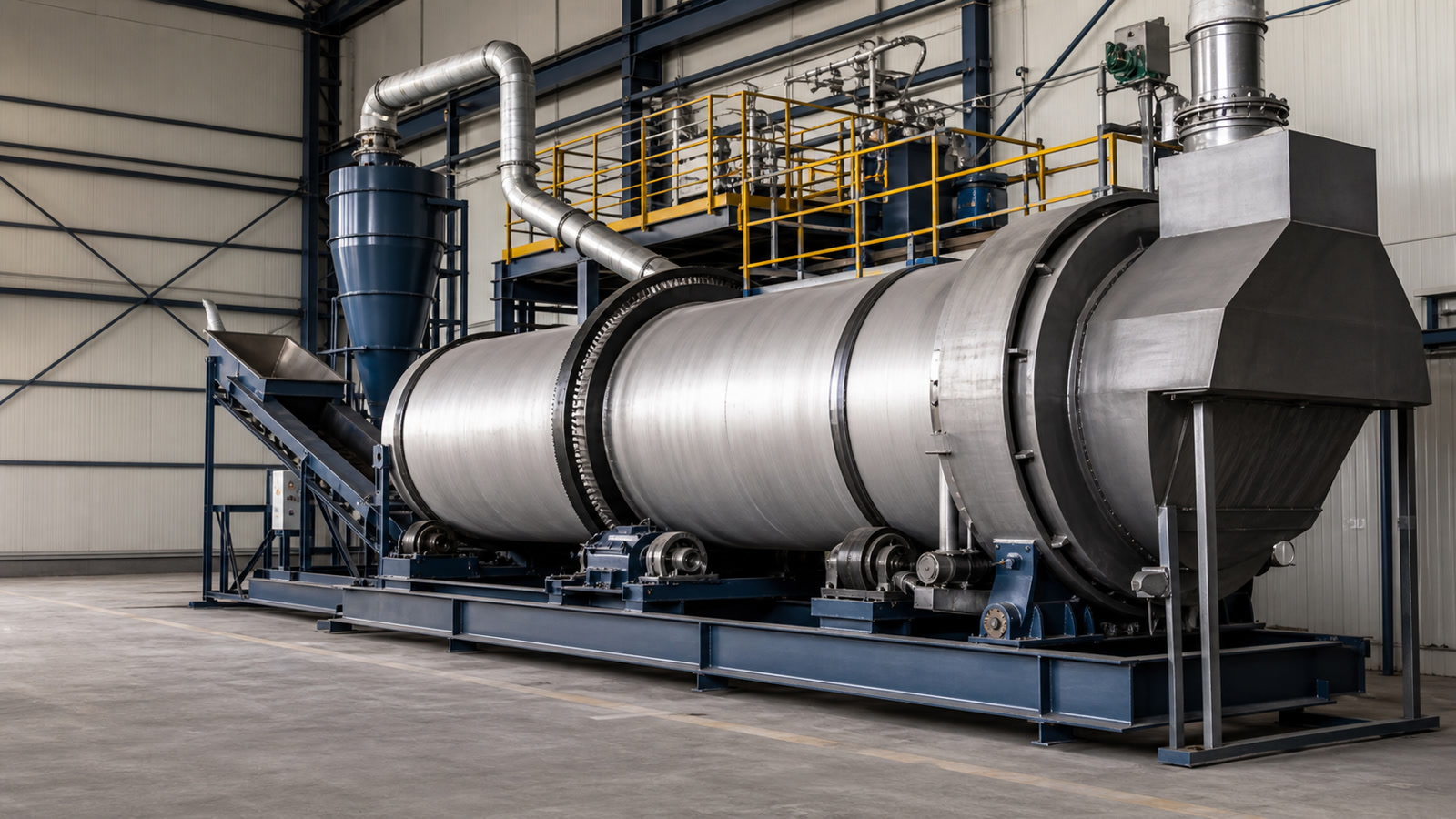
Rotary dryer systems remove moisture or volatile components from granular and particulate solids by direct contact with hot gas or by indirect heat transfer through the rotating shell. Feed behavior and product-quality limits are central to the mechanical and thermal design.
Engineering approach
A technically defined package begins with the operating envelope—not a catalogue model.
Rated capacity, minimum stable load, feed envelope, inlet and outlet conditions, product specification, start-up and shutdown cases, design life and acceptance criteria are agreed before equipment definition is frozen. The review also records utility margins, interfaces, inspection hold points, maintainability constraints and the evidence required for a controlled handover.
Define feed rate, inlet and target moisture, particle-size distribution, bulk density, stickiness, attrition sensitivity, allowable product temperature and hazardous dust classification.
Configuration covers direct or indirect heating, co-current or counter-current flow, flight geometry, residence time, burner or hot-gas generator, seals, solids feeding and discharge, dust collection and exhaust treatment.
Checks include heat and mass balance, shell speed and slope, drive torque, thermal expansion, refractory or metallurgy, dust explosion safeguards, emissions, product degradation and maintainability.
PROJECT DEFINITION · DELIVERY
Technical proposal quality depends on verified process data, acceptance criteria and interface definition. The following information is confirmed during clarification.
RFQ
Share the operating cases, feed data and required guarantee so the applicable process route, package boundary and verification plan can be defined.