
Design basis
Establish rich-MEG flow and concentration, salt and solids loading, hydrocarbon carry-over, regeneration target, reclamation rate, thermal degradation limits and disposal route.
Gas Processing · ENGINEERED SCOPE
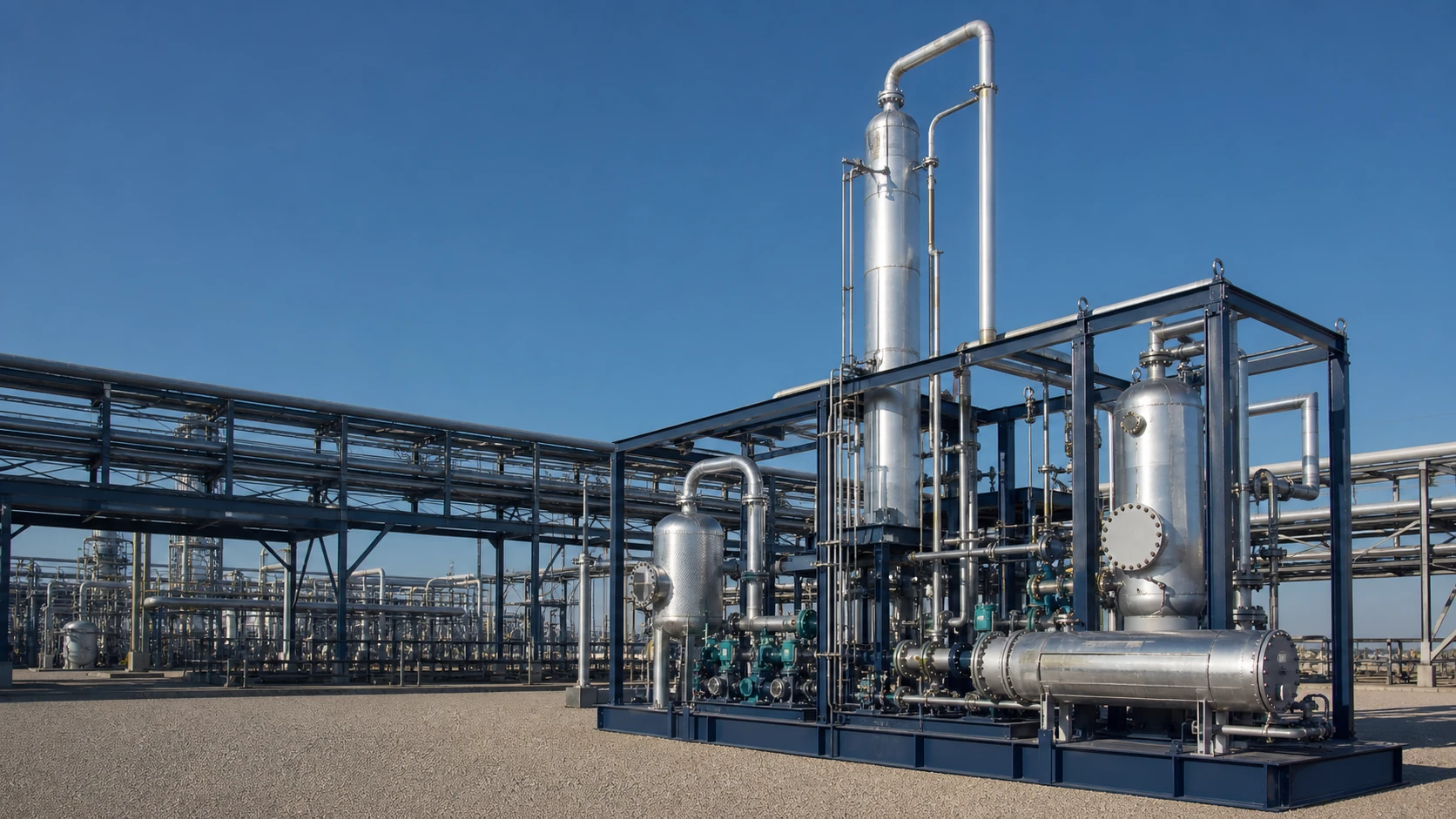
MEG regeneration and reclamation packages recover monoethylene glycol from hydrate-inhibition return streams for reuse. The design separates flashed gas and hydrocarbons, removes water, and—when required—controls dissolved salts and solids that would otherwise accumulate in the glycol loop.
Engineering approach
A technically defined package begins with the operating envelope—not a catalogue model.
Rated capacity, minimum stable load, feed envelope, inlet and outlet conditions, product specification, start-up and shutdown cases, design life and acceptance criteria are agreed before equipment definition is frozen. The review also records utility margins, interfaces, inspection hold points, maintainability constraints and the evidence required for a controlled handover.
Establish rich-MEG flow and concentration, salt and solids loading, hydrocarbon carry-over, regeneration target, reclamation rate, thermal degradation limits and disposal route.
A package may include flash separation, filtration, vacuum regeneration, reconcentration, salt management or reclamation, lean-MEG cooling and storage, chemical dosing and closed-drain interfaces.
The design is checked for vapor-liquid equilibrium, vacuum stability, salt precipitation, scaling, corrosion, foaming, hydrocarbon contamination, heat integration, glycol losses and product concentration across all operating cases.
PROJECT DEFINITION · DELIVERY
Technical proposal quality depends on verified process data, acceptance criteria and interface definition. The following information is confirmed during clarification.
RFQ
Share the operating cases, feed data and required guarantee so the applicable process route, package boundary and verification plan can be defined.