
Design basis
Characterize salinity, temperature, turbidity, SDI, organics, hardness, silica, boron and seasonal variability; define product flow, conductivity and end-use requirements.
Water Treatment Packages · ENGINEERED SCOPE
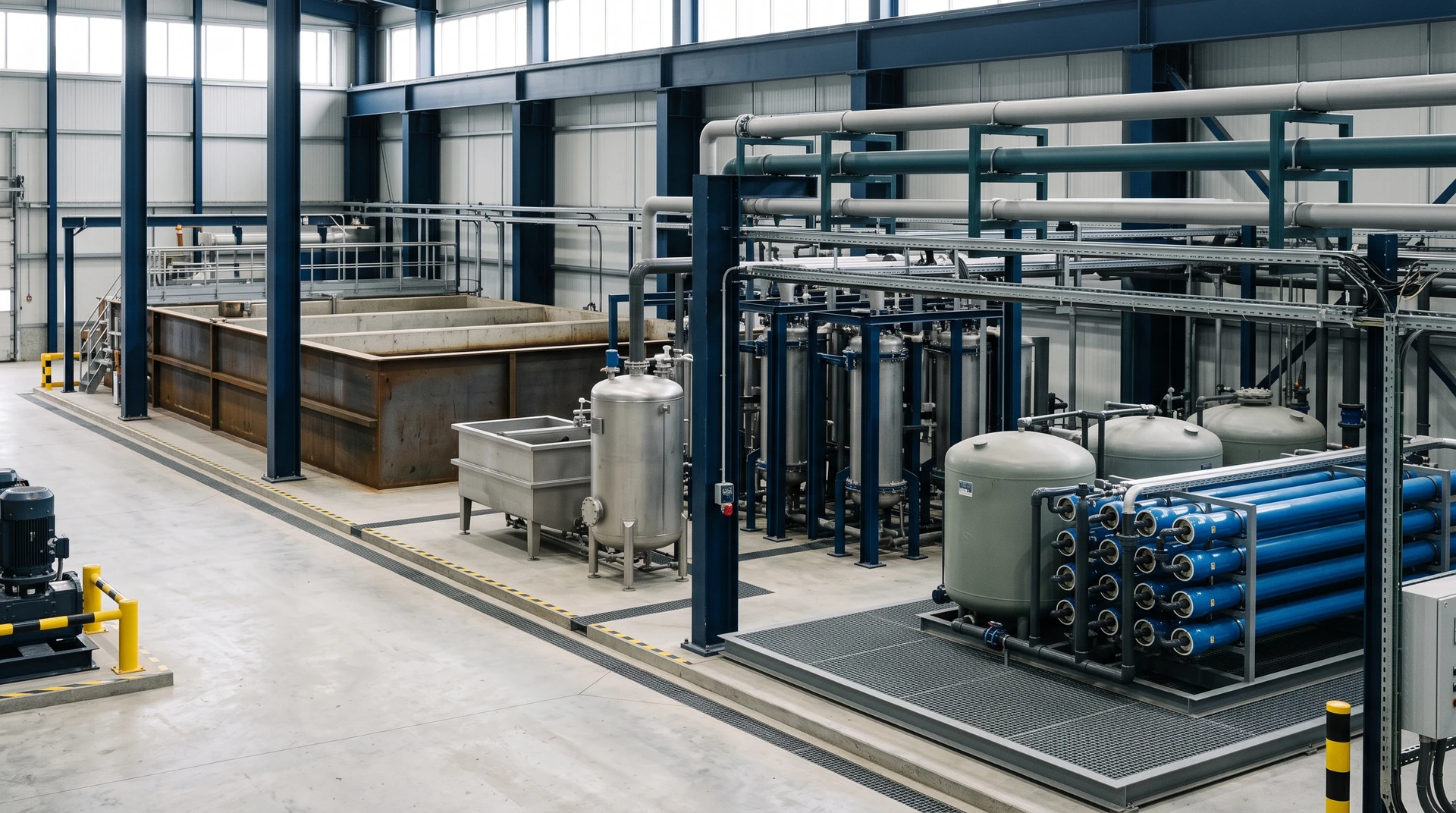
Industrial desalination packages convert seawater or brackish water into process, utility or potable-quality water through a project-specific pretreatment and membrane train. Product-water quality, recovery, fouling risk and concentrate disposal govern the configuration.
Engineering approach
A technically defined package begins with the operating envelope—not a catalogue model.
Rated capacity, minimum stable load, feed envelope, inlet and outlet conditions, product specification, start-up and shutdown cases, design life and acceptance criteria are agreed before equipment definition is frozen. Package basis also fixes battery limits, skid envelope, lifting and shipping constraints, utility tie-ins, FAT scope, preservation requirements and commissioning deliverables.
Characterize salinity, temperature, turbidity, SDI, organics, hardness, silica, boron and seasonal variability; define product flow, conductivity and end-use requirements.
Scope may include screening, clarification or dissolved-air flotation, multimedia or ultrafiltration pretreatment, cartridge filtration, chemical dosing, high-pressure pumps, reverse osmosis stages, energy recovery, CIP and remineralization.
The design is checked for membrane flux, scaling and biofouling, chemical compatibility, pressure drop, train availability, clean-in-place strategy, reject handling and product-water stability.
PROJECT DEFINITION · DELIVERY
Technical proposal quality depends on verified process data, acceptance criteria and interface definition. The following information is confirmed during clarification.
RFQ
Share the operating cases, feed data and required guarantee so the applicable process route, package boundary and verification plan can be defined.