
Design basis
Define wet-gas water load, circulation rate, rich and lean TEG concentration, flash-gas composition, required water dew point, available fuel or heat medium and emissions constraints.
Gas Processing · ENGINEERED SCOPE
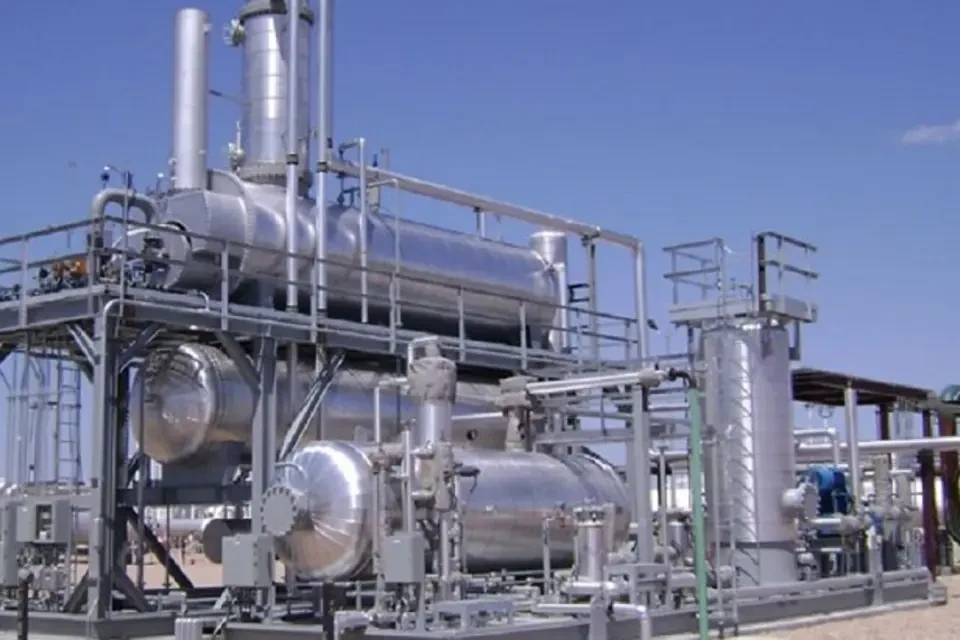
TEG regeneration packages restore water-rich triethylene glycol from a gas-dehydration contactor to the lean-glycol concentration required for recycle. Reboiler duty, stripping method, emissions and glycol-loss control are developed together with the contactor performance guarantee.
Engineering approach
A technically defined package begins with the operating envelope—not a catalogue model.
Rated capacity, minimum stable load, feed envelope, inlet and outlet conditions, product specification, start-up and shutdown cases, design life and acceptance criteria are agreed before equipment definition is frozen. The review also records utility margins, interfaces, inspection hold points, maintainability constraints and the evidence required for a controlled handover.
Define wet-gas water load, circulation rate, rich and lean TEG concentration, flash-gas composition, required water dew point, available fuel or heat medium and emissions constraints.
Typical equipment includes a flash tank, filters and carbon bed, lean-rich exchanger, still column, reboiler, surge vessel, circulation pumps, cooler and optional stripping gas, vacuum or enhanced-regeneration section.
Review covers glycol purity, reboiler temperature, thermal degradation, foaming, BTEX and VOC handling, flash-gas use, filter duty, pump NPSH, heat recovery, turndown and safe draining.
PROJECT DEFINITION · DELIVERY
Technical proposal quality depends on verified process data, acceptance criteria and interface definition. The following information is confirmed during clarification.
RFQ
Share the operating cases, feed data and required guarantee so the applicable process route, package boundary and verification plan can be defined.